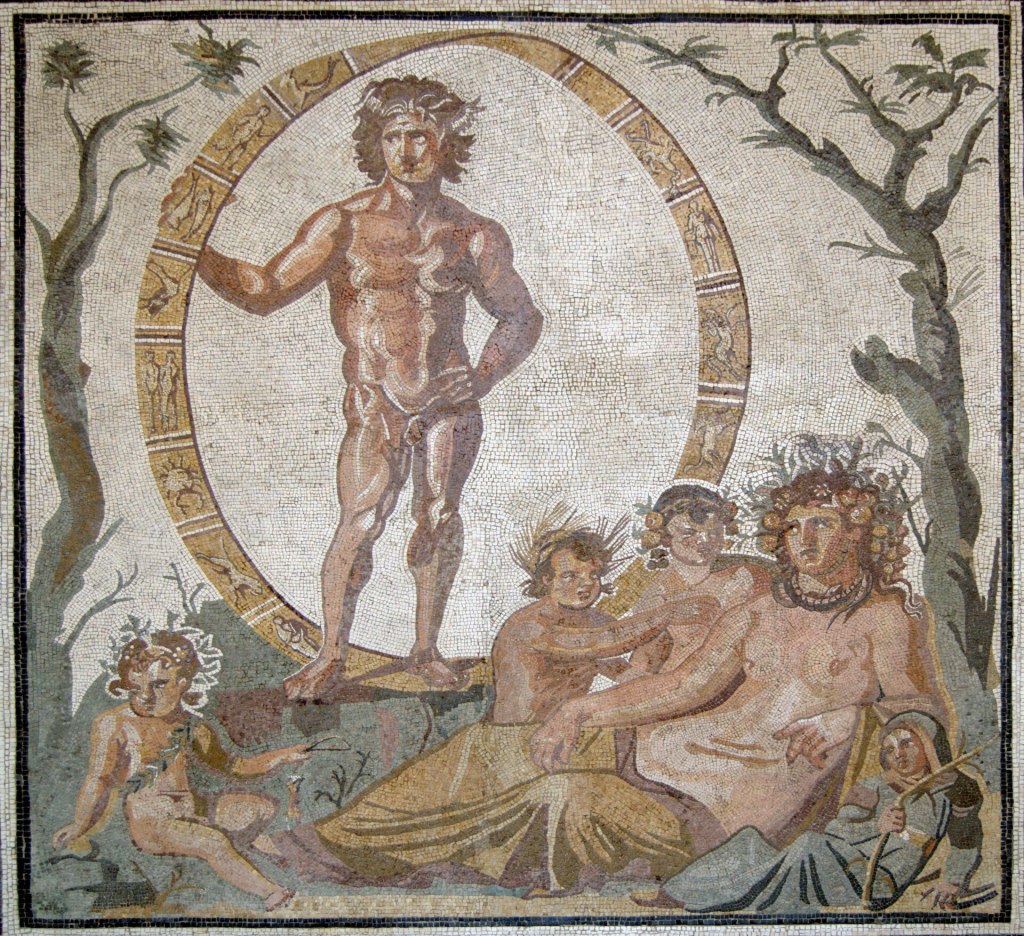
Who is Gaia
Gaia was historically one of the most important of all Greek gods and goddesses, although her name is not one that is often thought today in that connection. In Ancient Greece though she was revered, for not only was Gaia the Greek goddess of the Earth, but she was also the Mother Goddess, the ancestor of most other deities.
Today, neo-pagans still revere Gaia as she is still considered to be Mother Earth. Not just neopagans but also Hellenic and Hellenistic polytheists worship Her because like with Ouranos, she is also the Progenitor of the Gods like Titans and Olympians. But more than that, She also represents the Earth itself, basicly any planet. She is the mother to Ouranos and Pontos, also both Protogenoi. She is the mother of Titans, Hekatonkheires, Cyclops, Gigantes, Typhon among others.
Epithets
Gaia has several epithets and attributes. In poetry chthon frequently has the same meaning with Gaia.Some of her epithets are similar in some Indo-European languages. The universitality of the goddess is expressed by the prefix pan,(πάν).Some of the epithets of Gaia and Demeter are similar showing the identity of their nature.
- Anēsidora (ἀνησιδώρα), sending up gifts.
- Chthonia (χθονία) in Myconos.Pherecydes uses the name Chthonie, for the primeval goddess who became Ge:.
- Eurysternos (εὐρύστερνος): broad breasted.Earth is the broad seat of all immortals (Hesiod).
- Euryedeus (εὐρυεδεύς): broad seated.
- Karpophoros (καρποφόρος), bringer of fruits.
- Kalligeneia (καλλιγένεια), born beautiful.
- Kourotrophos (κουροτρόφος) :protector of young children, in Athens.
- Megali theos (Μεγάλη θεός) : Great goddess, in the mysteries of Phlya.
- Melaina (μελαίνα): black, in epic poetry.
- Olympia near the Olympeion of Athens.
- Pamphoros, (πάμφορος):all-bearing. The offspring of all.
- Pammētōr(παμμήτωρ) :mother of all
- Pammēteira(παμμήτειρα) :mother of all.
- Pamvōtis (παμβώτις) : all-nurturing.
- Pandōros (πάνδωρος) :plentiful, giver of all.
- Pheresvios (φερέσβιος)bringing forth life.
- Polivoteira (πουλυβότειρα): much nurturing.
- Themis (Θέμις) in Attica.
- Vathykolpos (βαθύκολπος): with deep, full breasts. This list will probably not complete. For more: go here.
Witness of Oaths
Like with Styx, Gaia was also invoked during oaths. Homer writes the following: “He [Zeus] spoke . . . : ‘Now let Gaia (Earth) be my witness in this, and wide Ouranos (Uranus, Heaven) above us, and the dripping water of the Styx, which oath is the biggest and most terrible among the blessed immortals.’”Aeschyles lets Prometheus invoke Gaia during an oath. Further in the Illiad, Homer writes that Agamemnon invokes Her during oaths. So she was invoked as a witness of oaths.
Oracle of Gaia
At Dodona before Zeus took it over, she had an oracle there as She did in Delphi before Apollon took over from Her. Major oracle sites were taken over by Olympian Gods that also deal with prophecy.
ancient worship vs modern worship
Ancient Greeks worshipped Gaia primarily as a primordial, elemental force of nature rather than a highly anthropomorphized deity, focusing on her as the nurturing Earth Mother. Worship involved invoking her in oaths as a witness, offering black sheep in sacrifice, and honoring her through shrines, altars, and local agricultural rituals rather than massive, dedicated temples. Oaths and Witness: Because Gaia was considered the foundation of all life, she was invoked to validate solemn oaths. Breaking an oath to Gaia was seen as dangerous, as she was a witness to all actions.
Sacrifices: According to the Iliad and other sources, black animals, such as lambs or sheep, were often sacrificed to her, sometimes in a chthonic manner—meaning the sacrifice was done to honor underworld/earth deities.
Altars and Shrines: Rather than dedicated cults, Gaia often had altars or shrines located within the sanctuaries of other gods, such as at Delphi (which was originally hers) or alongside Demeter in Athens and Sparta.
Sacred Sites: She was worshiped at sites like the Sanctuary of Ge Kourotrophos (Gaia as Nurse of the Young) on the Athenian Acropolis and at Phlya.
Many modern Neopagans, particularly Hellenistic Neopagan sects in the United States, actively worship Gaia. Beliefs regarding Gaia vary, ranging from the common Wiccan belief that Gaia is the Earth (or in some cases the spiritual embodiment of the earth, or the Goddess of the Earth), to the broader Neopagan belief that Gaia is the goddess of all creation, a Mother Goddess from which all other gods spring. Gaia is sometimes thought to embody the planets and the Earth, and sometimes thought to embody the entire universe.
Worship of Gaia is varied, ranging from prostration to druidic ritual.Unlike Zeus, a roving nomad god of the open sky, Gaia was manifest in enclosed spaces: the house, the courtyard, the womb, the cave. Her sacred animals are the serpent, the lunar bull, the pig, and bees. In her hand the narcotic poppy may be transmuted to a pomegranate.Some who worship Gaia attempt to get closer to Mother Earth by becoming unconcerned with material things and more in tune with nature. Others who worship Gaia recognize Gaia as a great goddess and practice rituals commonly associated with other forms of worship.
Many sects worship Gaia, even more than worship Themis, Artemis, and Hera. Some common forms of worship may include prostration, attempting to reach a greater connection to the earth, shamanistic practices, tithing, praising and praying, creating inspired works of art dedicated to the goddess, burning oils and incense, rearing plants and gardens, the creation and maintaining of Sacred Groves, and burning bread or spilling drink as offerings. Other forms of worship may indeed be common, as worship of Gaia is very broad and can take many forms.
Today, Gaia is primarily worshipped in Hellenic polytheism, reconstructionist traditions, and some earth-centered pagan paths. Unlike Olympian gods, Gaia’s worship tends to be quiet, grounded, and place-based rather than ceremonial or temple-focused.
Offerings to Her as simple and grounded like water, honey, myrrh, bread, grains, olive oil, milk. Seeing how She is a khthonic deity, Her offerings and libations are done outdoors, direcly on the ground. Unlike modern conception that She is all love and peace, Her true nature is very different. Although She can be that. She can also be destructive with earthquakes, vulcanic eruptions and other upheavel. Her myths resemble that. She counseled Rheia when pregnant with Zeus on what to do. She counsils Kronos when She felt the weight of her children being imprisoned within Her on how to deal with his divine father, Ouranos. She counseled Zeus on what to do and to free the Cyclops and Hekatonkheires so He could win the Titanomachy. Afterwards she turned against Him and sought to dethrone Zeus by the Gigantes and Typhon. So its clear that She is a cosmic force to be reckoned with that grounds people within reality. Many people who worship Her, will also be active within green enviromental groups.
That is all for now. If someone wants to add things, let me know in the comments?
 Aidonian's blog
Leave a comment