This is my blog where I write stuff that interest me: religion, politics etc…
Why Hades is misunderstood?
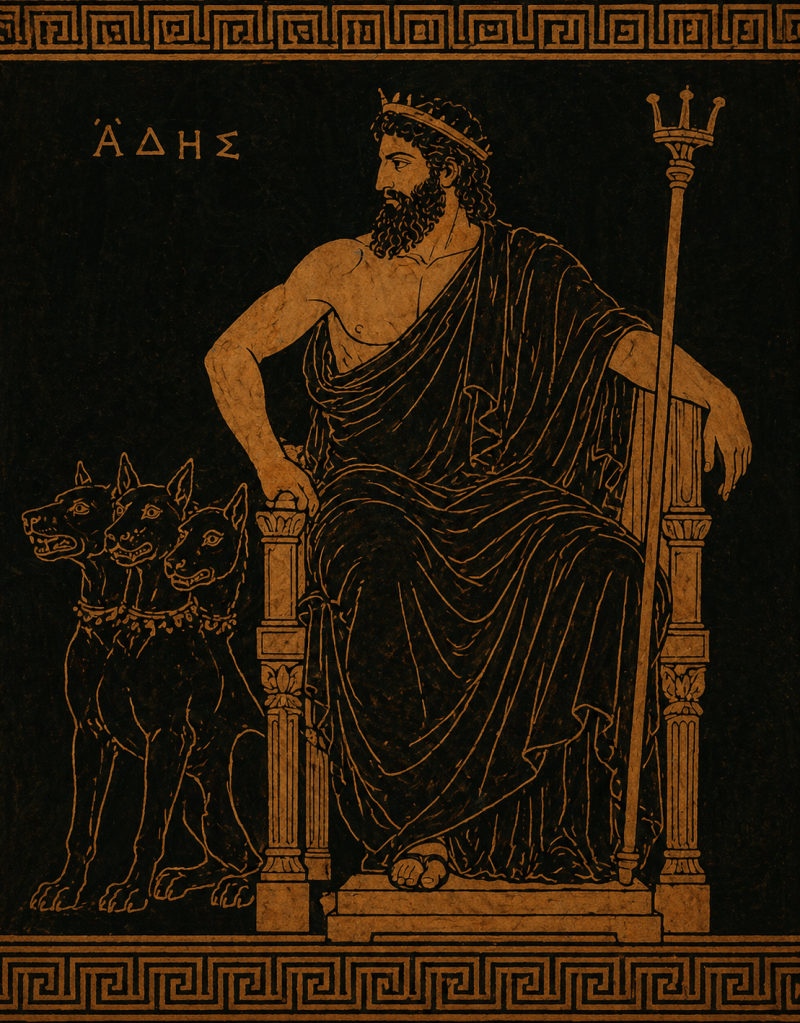
Plouton, who is better known as Hades or Pluto, is a kind of deity most people tend to avoid. Even during antiquity, he wasn’t widely worshipped like his brothers, sisters and nephew and nieces, but never the less, he was worshipped. His real name (Aidoneos) was never pronounced by the general public out of fear of being taken away by him to the Underworld. Instead they called him by alternative names like Pluto, Dis Pater, Ploutonas, Theos Khthonios or Zeus Katakhonios.
It is clear that Plouton isn’t a popular deity. He almost plays no role in mythology with that exception of a handful myths and he only stars in one myth that doesn’t quite put him in a good light. I’m referring to the abduction of Persephone. In this myth, he is no different from his brothers who did the same thing frequently in mythology. People didn’t like Plouton. It has mostly to do with his strong connections with the afterlife, that people feared him. It had nothing to do with him being a Hellenic version of Satan. The answer to why the Hellenes were so afraid of him lies in their beliefs in the afterlife, their way of life and in mythology. Hellenes were afraid of dying, just like every other being on this world. In that they don’t differ from any other culture on Earth. It is one of the reasons why the Greeks like to enjoy life to the fullest. They didn’t really know what to expect from the afterlife. They knew it was a grim place. Unlike Christianity, Judaism and Islam today, the ancient Greeks never really developed one singular view of the afterlife. They had several ideas on what the afterlife would be like, but those ideas never completed one another.
By the time of the 5th century B.C.E., Plouton had overshadowed Thanatos as the God of Death, and Plouton appeared as Hades in the Alkestis and Admetos myth where Herakles wrestled with the God of Death to save Alkestis from Death. So here we see that Plouton has taken Thanatos’ place in mythology as the personification of Death and its God. So Plouton isn’t just the God of the Underworld and Riches, but now he has become the God of Death as well. That would be enough for anyone to fear him. Certainly, if you knew that he could go to Earth and take mortals with him to his domain, like he did with Persephone, but she wasn’t mortal. So they tried to do with Him, like they did with the Erinyes. The Erinyes received euphemistic nicknames like the Eumenids to appease them. With Plouton, the same thing was done. He wasn’t just called Plouton or Hades anymore, since Hades was synonymous with the Underworld. But instead he received a wide variety of nicknames to appease him, like Zeus Katakhthonios, Theos Khthonios, Pluto, etc…. What happened here wasn’t an anomaly or anything like that. The assimilation of other deities by other deities is quite common, especially when the assimilated deity is a lower deity, or personification of something and the assimilator is an upper level deity, like Plouton or Apollon. It’s a normal thing when a national deity is associated with a local deity.
Another aspect to why people feared him is due to his association with the afterlife. The ancient Greeks didn’t have one singular view of the afterlife. They didn’t have concepts like heaven or hell. Sure they had Elysium, Tartaros and the Isle of the Blessed, but those were reserved for special cases. The general population, who didn’t fell in that category, dwelled aimlessly in the Underworld. Even for heroes it was no picnic. Homeros had Akhilles say to Odysseos, that he would rather be a slave, than to be dead. This coming from a man who wanted eternal fame and glory, says allot. It drove fear in the hearts of every Greek that death was the end for them. They knew there was a afterlife, but they knew that it was no fun to be dead, to be in Hades for the rest of eternity wondering around as body less souls. When Herakles encounters Medusa in Hades, she had no body, only a head that floats. It might look funny, but realizing the full potential of her powers, the fun is direct sucked out of it.
So the expectations for the afterlife were pretty grim. So in a way it is understandable why Christianity gained more ground than most pagan religions, since they offered a better afterlife. The only problem here was that the price for it is to high.
People back than had a greater appreciation for life, than for Death, so it is only understandable that they wouldn’t want much to do with Plouton. He can mean more than just Death or a prospect for a afterlife. Through Him, we can learn to appreciate life more and life it to the fullest. Without Death, there could be no Life. Without Death, life would be unbearable. Because we know we are mortal and we can die, it can offer us excitement, a reason to life. Without Death, there would be nothing we have to fear. We wouldn’t be able to grow old, to become sick and to be hurt. Nowadays, that is a dream for most people, to be immortal and to not die. But they are delusional. Sure I was once one of them, but not anymore. We need death as much as we need life. The two are intertwined. Without one, there can not be another. Plouton can offer us a view of how to life better and life day to day and enjoy each day. We don’t have to fear death but accept its inevitability. Through Plouton, we learn that Death does not discriminate. It does not separate the rich from the poor. To Death, we are all the same, no matter what status we have in life. We should help others through the process of grief. Remember the dead with fondness, for they live on in our thoughts and dreams. Plouton’ blessing is acceptance of our mortality. It’s the common lot of all men, what sets us apart from the Gods. It comes to everyone – the rich and the poor like. We can fight it off, attempt to resist the inevitable, but in the end we will always fail. We should live with the sure knowledge that we will die, and make every moment a good and worthy one. When our time comes, we should meet it nobly, as we would an esteemed friend.
Is Plouton a Satanlike figure?
No, Plouton isn’t a Satanlike figure. Hellenic polytheism doesn’t have satanlike figures at all. There is evil, there are evil beings, not evil Gods, since evil is a subjetive term that doesn’t apply to Gods. So no, if you were to worship Plouton, like I do, it wouldn’t make you a Satanist at all. The resemblances are there, like He rules with a iron fist, he is stern. He is Lord and King of the Underworld and all its inhabitants, including monsters and demons who dwell there.
Is He misunderstood?
I would say, yes. He is misunderstood. He is stern, but he is also calm, kind God when you worship Him. He was there for me when I needed Him. He offer guidance, protection and council. He is misunderstood through His connection with the afterlife and through the myth of abduction of Persephone. If you know how marriages were handled back then, you understand why the myth is how it is. The union of Plouton and Persephone is viewed through human eyes, based on human customs of that day. Kidnapping women to force them to marry you is wrong. Thats easy. The thing is, Plouton is misunderstood because people view these myths through a modern lens. That lies the issue many people have with the myths. The ancient Greeks had a different view on the Gods, one that was different from how they were portrayed in the myths. Talk to any polytheists who worships them today and you will get a different view than what the myths give you. Even philosophers back than railed against the Homeric view of the Gods.
In an earlier blogpost I mentioned how I connected with Plouton when I started using Plouton instead of Aidoneos or Hades, further proof that the Gods do listen and can be approached. Sometimes its trial and error to see what works. So since that day, I started using Plouton and not Aidoneos, even though Aidoneos is the original name, He seems to prefer people calling Him Plouton. This is also good example that They do listen but its their choice when they respond to your prayers and offerings. You could ask why you chose to worship Him before that? Well I did feel a connection to Him and He chose to answer when I used the correct name He wanted to be known as.
 Aidonian's blog
Leave a comment